

Baby-Proofing Your Home: A Practical Safety Guide for Parents, Baby Nurses, and Nannies


A baby’s safety begins long before an accident happens. Once a child starts rolling, crawling, standing, or walking, the home can quickly become full of hidden risks. Common household items such as loose cords, unlocked cabinets, sharp furniture corners, hot surfaces, small objects, medications, and stairs can become dangerous when a baby is exploring.
Baby-proofing is not about making the home perfect. It is about reducing risks, creating safer routines, and helping parents, nannies, caregivers, and household staff stay alert.
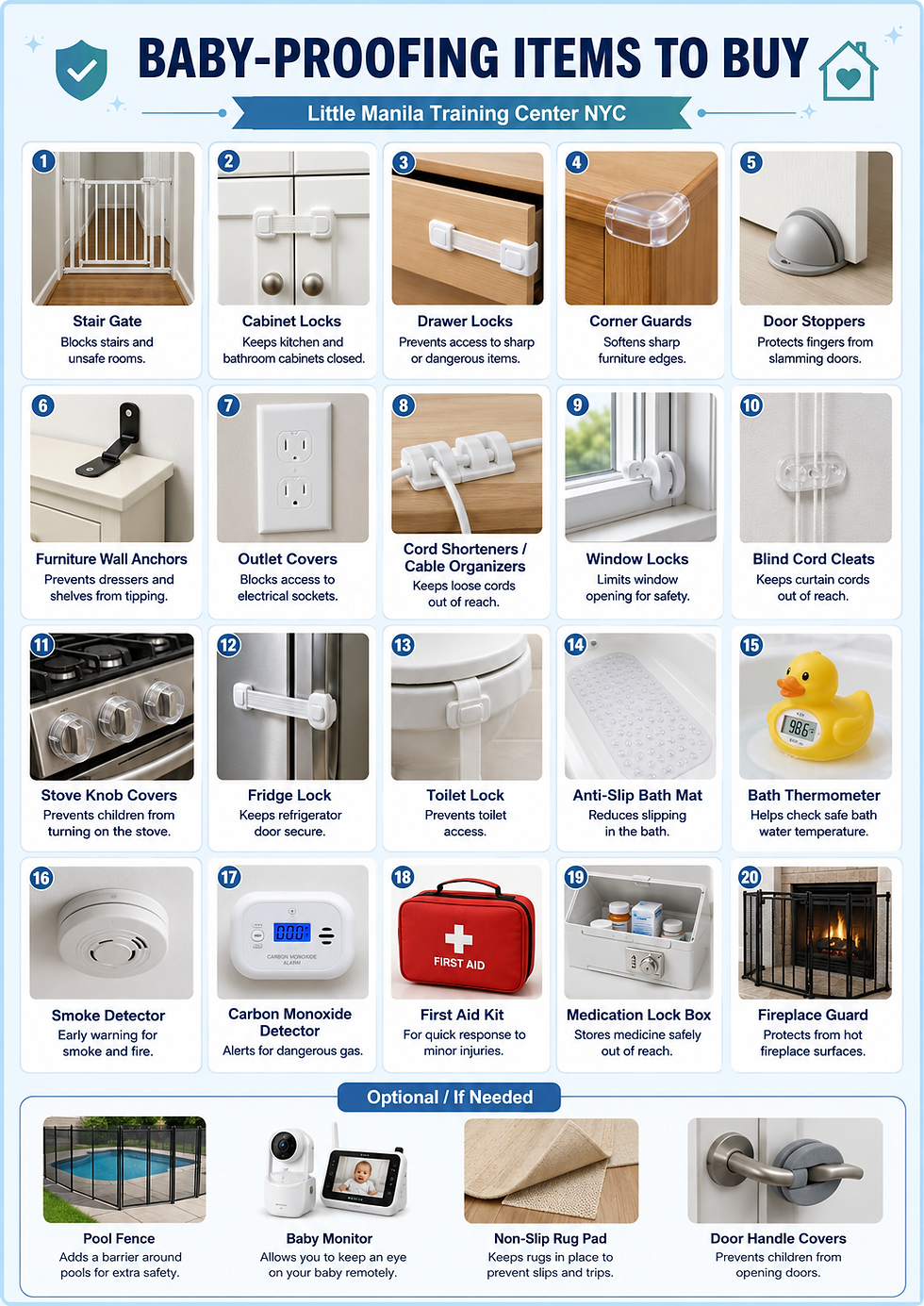
This guide is based on our agency’s Nanny Training Program, along with the Baby-Proofing Checklist and the Baby-Proofing Items to Buy visual guide. Families and their nanny can walk through the home room by room, and use the shopping guide to purchase essential safety items for a safer home environment.
Why Baby-Proofing Matters
Babies and toddlers are naturally curious. They touch, pull, climb, open, taste, and explore almost everything around them. This is normal development, but it also means adults must prepare the home before the child reaches the next stage.
A safe home helps prevent:
Falls from stairs, furniture, beds, windows, and slippery surfaces
Burns from hot drinks, radiators, pipes, stoves, fireplaces, and bath water
Choking from small objects, batteries, coins, toys, and food
Poisoning from medicine, cleaning products, toxic plants, and chemicals
Electrical accidents from outlets, loose cables, chargers, and appliances
Finger injuries from doors, drawers, and cabinets
Drowning risks in bathtubs, toilets, pools, ponds, and buckets
Furniture tip-over injuries from dressers, shelves, lamps, and televisions
Baby-proofing does not replace adult supervision. It supports supervision by reducing preventable dangers.
Start With a Home Walkthrough
Before buying anything, walk around the home at the baby’s level. A helpful method is to kneel or sit on the floor and look around from the baby’s point of view.
Ask yourself:
What can the baby reach?
What can the baby pull?
What can fall over?
What can open?
What can burn, cut, choke, poison, trap, or shock the child?
What areas should be blocked completely?
Use the checklist as a room-by-room guide. Mark off each item only after it has been checked or corrected.

Essential Baby-Proofing Areas
1. Stairs and Unsafe Rooms
Stairs are one of the most important areas to secure. Install stair gates at the top and bottom of stairways. Use gates that are properly mounted and appropriate for the area. Avoid pressure-mounted gates at the top of stairs unless the manufacturer specifically approves them for that use.
Also block access to rooms that are not safe for babies, such as laundry rooms, storage rooms, garages, kitchens during cooking, bathrooms, and areas with cleaning products or tools.
2. Furniture, Lamps, and Heavy Items
Babies often pull themselves up using furniture. Dressers, bookshelves, cabinets, televisions, and tall lamps can tip over if they are not secured.
Use furniture wall anchors to attach heavy furniture to the wall. Place tall lamps behind furniture or in areas the baby cannot reach. Keep heavy items away from the edge of tables and shelves.
3. Cabinets, Drawers, and Doors
Install cabinet locks and drawer locks, especially in the kitchen, bathroom, laundry area, and office. These areas often contain sharp tools, glass, cleaning products, plastic bags, medicine, batteries, and other dangerous items.
Use door stoppers or finger guards to prevent doors from slamming on a child’s fingers. Door handle covers may also be helpful for rooms that should stay closed.
4. Electrical Safety
Electrical outlets, loose cords, chargers, hairdryers, and straighteners are common household hazards.
Use outlet covers or tamper-resistant outlet protection. Keep loose cables out of reach with cord shorteners or cable organizers. Unplug hairdryers, straighteners, and small appliances after use, and store them safely.
Never leave charging cords hanging where a baby can pull them.
5. Windows, Blinds, and Curtain Cords
Windows should be locked or limited so a child cannot open them wide enough to fall. Use window locks or window guards when appropriate.
Blind and curtain cords must be kept out of reach. Use blind cord cleats or cord wind-ups to secure dangling cords. Cords can create strangulation risks, especially near cribs, beds, play areas, and furniture a child can climb.
6. Kitchen Safety
The kitchen is one of the highest-risk areas in the home. Install cabinet locks, drawer locks, stove knob covers, and appliance locks where needed.
Keep knives, scissors, glass, plastic bags, cleaning products, batteries, and small objects out of reach. Turn pot handles inward while cooking. Keep hot drinks and hot food away from table edges and counters.
A cup of tea, coffee, or hot liquid can still burn a child even several minutes after being made. Always keep hot drinks away from children.
7. Bathroom Safety
Bathrooms require constant supervision. Never leave a child alone in the bathtub, even for a few seconds.
Use an anti-slip bath mat to reduce slipping. Check bath water before placing the baby in the tub. A bath thermometer can help confirm safe water temperature. Run cold water first, then add hot water, and always test the water before bath time.
Install toilet locks if needed, and keep medicine, razors, cosmetics, cleaning products, and toiletries locked away.
8. Fire, Heat, and Carbon Monoxide Safety
Every home should have working smoke detectors and carbon monoxide detectors. Check batteries regularly and replace units according to the manufacturer’s recommendations.
If the home has a fireplace, use a fireplace guard. Also block access to hot radiators, pipes, heaters, and other hot surfaces.
Keep matches, lighters, candles, and electrical heating devices out of reach.
9. Choking and Poisoning Prevention
Small objects can be dangerous for babies and toddlers. Move coins, buttons, batteries, small toys, jewelry, magnets, beads, caps, and other choking hazards out of reach.
Store medicine in a locked box or high locked cabinet. Keep cleaning products, chemicals, laundry pods, toxic plants, alcohol, and personal care products away from children.
Disc-shaped foods should be cut in half lengthways before being given to young children. Always supervise children while they are eating.
10. Water Safety
Never leave a baby or toddler unattended near water. This includes bathtubs, toilets, buckets, pools, ponds, and even shallow water.
If there is a pool or pond, it should be fenced off with a proper safety barrier. Toilet locks, bathroom door safety, and constant supervision are also important.
Baby-Proofing Items to Buy
The following items are helpful for many homes:
Stair gate
Cabinet locks
Drawer locks
Corner guards
Door stoppers
Furniture wall anchors
Outlet covers
Cord shorteners or cable organizers
Window locks
Blind cord cleats
Stove knob covers
Fridge lock
Toilet lock
Anti-slip bath mat
Bath thermometer
Smoke detector
Carbon monoxide detector
First aid kit
Medication lock box
Fireplace guard
Optional items may include a pool fence, baby monitor, non-slip rug pad, and door handle covers, depending on the home.
Important Reminder for Families and Caregivers
Baby-proofing is not a one-time task. It should be reviewed regularly because babies grow quickly. A child who could not reach a drawer last month may be able to open it today. A baby who was only crawling may suddenly begin climbing.
Parents, nannies, caregivers, baby nurses, and household staff should all understand the safety setup of the home. Everyone should know where the first aid kit is located, which rooms are off-limits, and what items must always be kept out of reach.
Final Safety Tips
Never leave a child unattended while eating.
Never leave a child unattended in the bath.
Keep hot drinks, hot food, and sharp objects away from edges.
Keep medicine, cleaning products, and batteries locked away.
Secure furniture to the wall.
Keep cords and blind strings out of reach.
Check smoke and carbon monoxide detectors.
Review the checklist often as the baby grows.
A safer home gives children room to grow, explore, and learn while giving parents and caregivers greater peace of mind.
#BabyProofing #BabySafety #ChildSafety #NannyTraining #NannyTips #CaregiverTraining #InfantSafety #ToddlerSafety #HomeSafety #Childproofing #ParentingTips #NewParents #NannyLife #CaregiverLife #FilipinaNanny #LittleManilaTrainingCenterNYC #DirectHireAgency #FilipinoNanny #NYCNanny #NewYorkFamilies #FamilySafety #SafeHomeForBaby #BabyProofingChecklist #ChildcareTraining #ProfessionalNanny


Comments